Car Dehumidifiers: Do They Work, and Which Kind?
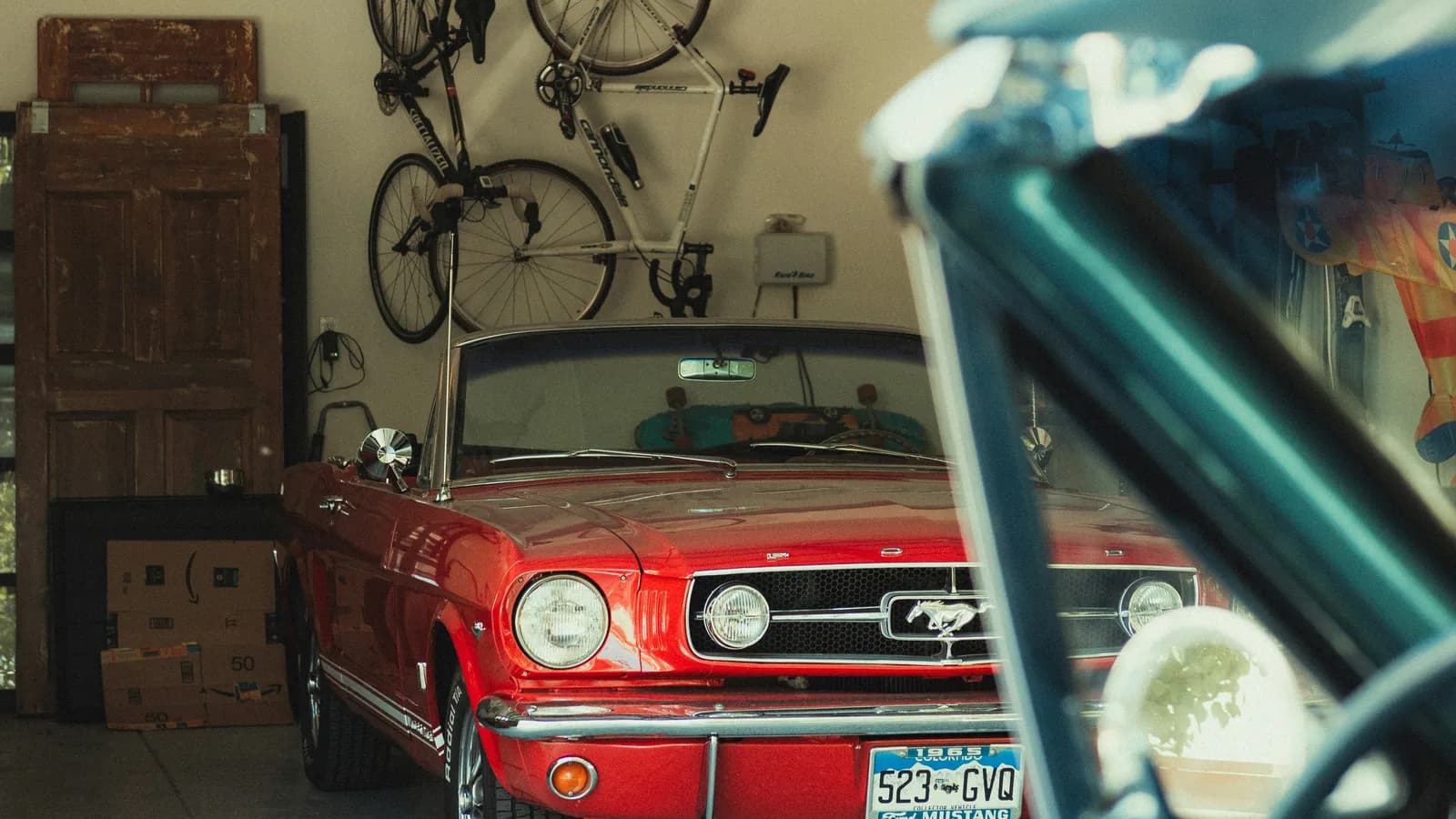
Car dehumidifier bags work, but only for a small job. A silica bag on the dashboard noticeably reduces windscreen misting in a car you drive every day. It can't keep up with a leak, dry out soaked carpets, or protect a car stored for months in a damp garage. For a stored car, the thing to dehumidify is the space it's in: the garage, or a powered bubble around the car.
This guide covers what each kind of dehumidifier does, which suits which job, and how to set one up so it actually helps.
The short answer
| Type | What it does | Best for | Needs power? |
|---|---|---|---|
| Dehumidifier bag (silica) | Absorbs a little moisture from the cabin air | Misting in a car you use daily | No |
| Desiccant garage dehumidifier | Dries the whole garage, and keeps working in the cold | A car stored in an unheated garage | Yes |
| Compressor garage dehumidifier | Dries the whole garage, using less electricity | A garage that stays mild | Yes |
| Powered car bubble | Encloses the car and circulates filtered air | A car stored in a damp garage or outbuilding | Yes |
| Climate controlled storage | Holds the whole building at a stable humidity | Valuable cars, long lay-ups, no suitable garage | No (it's done for you) |
Why cars get damp in the first place
Moisture gets into a car from breath, wet coats and shoes, and any water getting past a seal. On a cold night it condenses on the glass. In a car you drive, the air conditioning dries the air every time you use it. In a car that's parked up, nothing does, and the moisture stays in the carpets and seats.
If your windows stream every morning, the car is holding water somewhere, and no dehumidifier will fix that until the leak is found. Our guide to car mould and condensation shows how to trace the usual leaks.
Dehumidifier bags: what they can and can't do
Car dehumidifier bags are filled with silica gel, which soaks up water vapour from the air around it. Most have an indicator that changes colour when the bag is full, and you dry them out in a microwave or on a radiator and use them again.
They hold less than people expect. Pingi's popular 300g bag, for example, is listed by retailers as holding about 120ml of water before it needs drying. That's plenty for the moisture that mists a windscreen overnight. It's nothing against a leaking seal or a wet footwell.
Use a bag well:
- Put it on the dashboard, near the windscreen, where condensation forms first.
- Check the indicator, and dry it when it changes colour — more often in wet weather.
- Follow the drying instructions for your bag, and let it cool before you put it back.
- Use it alongside the air conditioning and fresh-air setting, not instead of them.
Don't rely on a bag to:
- protect a car stored for a whole winter. Once it's full, it does nothing, and in a damp garage that can happen within days;
- dry out wet carpets or underlay, which need heat and airflow;
- cope with a leak.
Storing a car: dehumidify the space, not the car
A stored car sits sealed for weeks with no air conditioning, so the conditions it's kept in matter far more than anything you put on the dashboard.
The figure to aim for is 50–60% relative humidity. Corrosion and mould both speed up once humidity gets past about 60–70%, and an unheated home garage can easily sit above that from November to March. A cheap digital hygrometer, left in the garage for a week, tells you whether you have a problem.
If you do, you have three options: dry the garage, put the car in a powered bubble, or store it somewhere that controls the humidity for you.
Garage dehumidifiers: desiccant or compressor?
There are two types of plug-in dehumidifier, and in a British garage the difference matters.
Compressor dehumidifiers chill a coil so moisture condenses on it, the way a fridge does. They're efficient in a warm room but struggle in the cold. Meaco, which makes both types, says that below around 15°C, compressor dehumidifiers are programmed to spend up to two thirds of their time defrosting themselves rather than drying the air.
Desiccant dehumidifiers pass air over a material that absorbs moisture, then dry it with a small heater. Their performance barely changes as the temperature falls, and the heater adds a little warmth to the space. Meaco recommends them for unheated spaces such as garages and sheds. The trade-off is electricity: they use more of it than a compressor model in a mild room.
Which to buy: for an unheated garage that's often below about 15°C in winter, a desiccant model. For a garage attached to the house that stays mild, a modern compressor model will do the job more cheaply.
Setting one up
- Set the humidistat to around 50–60%, so it only runs when needed.
- Run a hose to a drain if the unit has one. A full tank stops it working, usually in the middle of the week you're away.
- Seal the worst draughts. A dehumidifier in a garage with a gap under the door is trying to dry the outside air. Brush strips on the door make a real difference.
- Keep the car dry going in. Put it away after a dry drive, never straight after rain.
- Use a breathable cover, or none. A non-breathable cover traps moisture against the paint.
Car bubbles and covers
A powered car bubble, such as a Carcoon, encloses the car in a sealed plastic cover and runs fans around the clock to circulate filtered air inside it. That moving air stops condensation forming on the car, even when the garage itself is damp. Carcoon's system runs from a 12V supply that also trickle-charges the car's battery. It needs a mains socket.
An unpowered bubble or plastic sheet is a different thing entirely: with no airflow, it can trap moisture around the car and make things worse. If you're covering a car without a powered system, use a breathable indoor cover, and only on a car that's completely dry.
Which do you need?
You drive the car every day and the windows mist up. A dehumidifier bag on the dashboard, plus air conditioning on fresh air. If it's still streaming every morning, look for a leak.
The car is going into your garage for the winter. Check the humidity first. If it's above 60%, fit a garage dehumidifier (desiccant if the garage is cold), put a battery conditioner on the car, and use a breathable cover. Our guide to storing a car over winter has the full checklist.
Your garage is damp, draughty or has no power. A dehumidifier won't cope with an open, unpowered space. A powered bubble needs power too. This is the point where storage is usually the better answer.
The car is a classic, valuable, or going away for months. The safest option is climate controlled storage, where the building is held at a stable humidity and someone looks after the battery and tyres. Our guide to storing a classic car over winter covers what else an older car needs.
Common mistakes
- A bag left in a stored car all winter. It fills up in days and then does nothing, while you assume it's working.
- A compressor unit in a freezing garage. It spends much of its time defrosting.
- No drain hose. The tank fills, the unit stops, and the humidity climbs back up.
- A plastic sheet over the car. It traps moisture against the paint.
- Putting the car away wet. Whatever you use then has to remove the water you sealed in.
Motorkeep is an independent introduction service for car storage; we don't own or operate any facility we list, and we don't sell or receive commission on any product mentioned here. Compressor and desiccant performance is as described by Meaco; Pingi capacity is from retailer product listings; Carcoon's system is as described by the manufacturer. Check the instructions for any product you buy.
Frequently asked questions
- Do car dehumidifiers work?
- Dehumidifier bags work for what they're designed for: soaking up the small amount of moisture that makes windscreens mist up in a car you drive every day. They can't keep up with a leak, dry out wet carpets, or protect a car stored for months in a damp garage. For a stored car, you need to dehumidify the space, not just the cabin.
- Where should I put a car dehumidifier bag?
- On the dashboard, close to the windscreen, which is where condensation forms first. Some owners put a second bag in the rear footwell. Keep it where you can see the indicator, so you know when it needs drying out.
- How often do I need to dry a car dehumidifier bag?
- When its indicator changes colour, which can be every few days in wet weather and much less often in summer. Most silica bags are dried in a microwave for a few minutes or on a radiator; follow the instructions for your bag, and let it cool before putting it back.
- What type of dehumidifier is best for a garage?
- For an unheated garage, usually a desiccant model. Meaco, which makes both types, says that below around 15°C compressor dehumidifiers are programmed to spend up to two thirds of their time defrosting themselves, while desiccant units keep working in the cold and add a little warmth. In a garage that stays mild, a modern compressor model uses less electricity.
- What humidity should a car be stored at?
- Around 50–60% relative humidity. Corrosion and mould both speed up once humidity gets past about 60–70%, and an unheated garage can sit above that for most of a British winter. A cheap hygrometer will tell you where yours is.
- Do car storage bubbles work?
- The powered ones do a different job from a cover. A car bubble such as a Carcoon encloses the car and runs fans continuously to circulate filtered air, which stops condensation forming on it. It needs a mains supply. An unpowered bubble or a non-breathable cover can trap moisture against the car instead.
- Can I leave a dehumidifier running in my garage all winter?
- Yes, if it's designed for it. Set the built-in humidistat to around 50–60% so it only runs when it needs to, run a hose to a drain so the tank doesn't fill and stop it, and seal the worst draughts around the garage door so you're not drying the outside air.