Trickle Charging a Car Battery: What to Buy
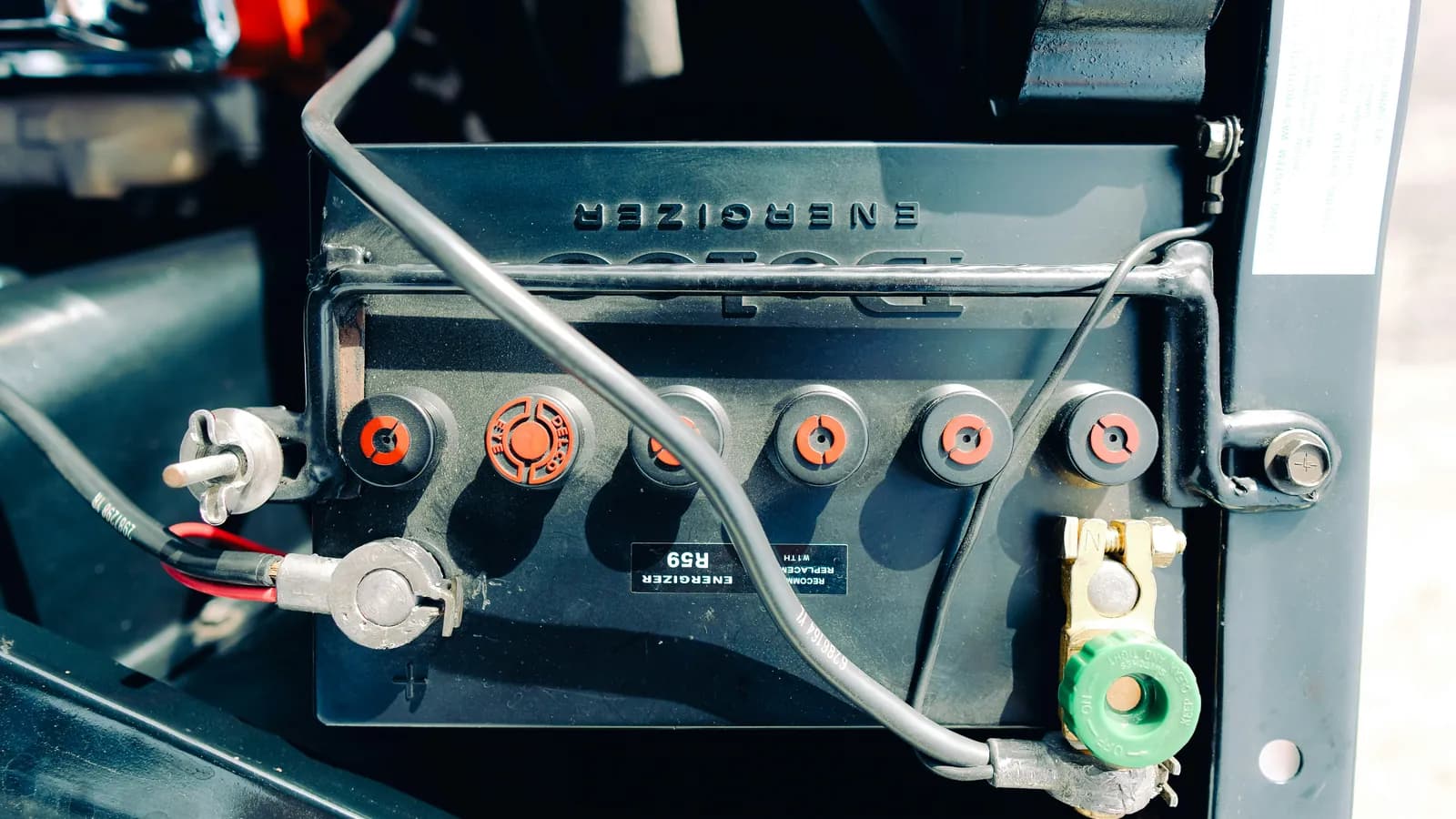
If a car is going to sit for more than a couple of weeks, connect a smart charger (also called a battery conditioner or maintainer) and leave it on. It charges the battery, then holds it at the right level for as long as the car is parked. An old-style trickle charger isn't the same thing: it keeps charging until you unplug it, and left connected for weeks it will overcharge the battery.
This guide covers what to buy, which batteries need what, how to connect a charger to a modern car without upsetting its electronics, and whether solar chargers are worth it.
The short answer
| Old-style trickle charger | Smart charger / battery conditioner | |
|---|---|---|
| How it works | A small, constant current | Charges in stages, then maintains |
| Leave it connected all winter? | No: it will overcharge | Yes: designed for it |
| Start-stop (AGM/EFB) batteries | Not suitable | Yes (check for an AGM mode) |
| Typical price | Cheap | £27–£90 |
Why a stored car's battery goes flat
A car keeps drawing a little power even when it's switched off and locked, for the alarm, the clock and the electronics that wait for the key. On top of that, every battery slowly discharges on its own. Leave a car for long enough and the battery runs down.
How long is long enough? BMW and the AA both say a healthy battery should last at least two weeks without the car being started. The RAC says it may weaken by around a month, particularly if the battery is older, and that problems get worse at three months.
A flat battery isn't just an inconvenience. CTEK says sulphation, caused by a battery being left discharged, is the cause of 85% of battery failures under warranty. A battery that's allowed to go flat, especially in cold weather, often never holds a full charge again.
Trickle charger or battery conditioner?
The names get used loosely, which causes most of the confusion.
An old-style trickle charger supplies a small, constant current for as long as it's plugged in. Halfords' guidance is that this kind keeps charging until you unplug it, so if you leave it on once the battery is full, the battery overcharges. Overcharged batteries lose their capacity to hold charge.
A smart charger, battery conditioner or maintainer is what you want for a stored car. It charges in stages and, once the battery is full, switches to a maintenance mode. CTEK's chargers, for example, hold the battery at a low float voltage, then move to a "pulse" mode that only tops the battery back up when its voltage drops. The AA says you can leave an intelligent charger connected for long periods without damaging the battery.
If you're not sure which kind you have, the RAC's advice is to check with the manufacturer whether it can be left on a battery indefinitely.
CTEK adds one useful check: if a charger hasn't reached its maintenance stage within three days, disconnect it, because something is wrong with the battery.
Which battery do you have?
Ordinary lead-acid (most older cars): any decent smart charger will do.
AGM or EFB (start-stop cars): Halfords and the AA both say these need a smart charger, not a conventional one. Some chargers have a specific AGM setting; CTEK suggests checking the battery maker's advice on which mode to use.
Lithium (LiFePO4): these need a charger designed for lithium. CTEK warns of severe risks from overcharging and doesn't recommend its lead-acid chargers for lithium batteries. Some chargers handle both; check before you connect.
Connecting a charger to a modern car
On an older car, you clip the charger onto the battery terminals and that's that. On a modern car, it's worth reading the handbook first.
Many newer cars have charging or jump points under the bonnet, and some batteries sit in the boot or under a seat. The RAC warns that on a modern car, clipping onto the battery's negative terminal may bypass the battery management sensor. CTEK gives the same advice for start-stop cars: connect the negative clamp to an earth point, not the negative terminal. Volvo, for one, tells owners to use the charging points in the engine compartment and never the battery's negative terminal.
Then a few safety points:
- Ventilation. Lead-acid batteries can give off hydrogen while charging. Halfords and the RAC both say to charge in a dry, well-ventilated space and keep the charger away from the battery itself.
- Frozen batteries. CTEK warns that a frozen battery must be thawed and checked for cracks before charging, and that it's probably damaged. A flat battery can freeze at just a few degrees below zero, while a fully charged one won't freeze until around -67°C, which is another reason to keep it topped up.
- The instructions. Every charger connects slightly differently, so follow the maker's instructions as well as your car's handbook.
What about solar trickle chargers?
Solar chargers sit behind the windscreen and plug into the car's power socket or clip to the battery. They're designed to replace the small amount of charge a battery loses on its own, not to recharge it. The AA's verdict is that a solar charger won't charge a flat battery, but it will help keep the battery charged on a car you don't use much. Halfords sells a 10W solar maintainer for £33, though it notes it isn't compatible with start-stop cars.
The catch is light. A small panel produces very little in a British winter, and less again behind a garage window. For a car parked outside in a sunny spot they can help. For a car laid up indoors from November to March, a mains conditioner is the more reliable choice.
No power in the garage?
If the car lives somewhere without a socket, the simplest option is to take the battery out and charge it indoors every few weeks, then refit it. On older cars that's a five-minute job. On a modern car, check the handbook before disconnecting the battery at all.
What it costs
At Halfords in late October 2026:
| Charger | Price |
|---|---|
| Halfords Advanced 1A smart charger (lead-acid, AGM and lithium) | £27 |
| NOCO GENIUS1 | £47.95 |
| CTEK MXS 5.0 | £89.90 |
| Halfords 10W solar maintainer | £33 |
Any of them costs less than a new battery.
The bigger picture
A battery conditioner is one part of laying a car up properly. Our guides to storing a car over winter and how long a car can sit without being driven cover the rest, from tyres and fuel to damp. If the garage itself is damp, see car dehumidifiers.
And if you'd rather not deal with it at all, most managed storage facilities keep stored cars on a battery conditioner as standard. Our guide to what car storage costs explains what's usually included.
Motorkeep is an independent introduction service for car storage; we don't own or operate any facility we list, and we don't sell or receive commission on any charger mentioned here. Advice is from Halfords, the AA, the RAC, CTEK, BMW and Volvo; prices were checked at Halfords on 27 October 2026. Always follow your car's handbook and the charger maker's instructions.
Frequently asked questions
- Can you leave a trickle charger on a car battery all the time?
- Only if it's a smart charger, also called a battery conditioner or maintainer. These switch to a maintenance mode once the battery is full and can stay connected for weeks or months. An old-style trickle charger keeps pushing current in until you unplug it, so leaving one connected will overcharge the battery and shorten its life.
- What's the difference between a trickle charger and a battery conditioner?
- A basic trickle charger supplies a small, constant current. A battery conditioner (or smart charger) charges in stages and then holds the battery at the right level, topping it up only when the voltage drops. For a car that's parked for weeks or months, you want the conditioner.
- How long will a car battery last without being driven?
- BMW and the AA both say a healthy battery should last at least two weeks. The RAC says it may weaken by around a month, especially if it's older, and that problems are worse at three months. Beyond a couple of weeks, connect a smart charger or battery maintainer.
- Do I need a special charger for a start-stop car?
- Yes. Start-stop cars use AGM or EFB batteries, and Halfords and the AA both say they need a smart charger rather than a conventional one. Some chargers have a specific AGM mode; check your battery maker's advice.
- Where do I connect a battery charger on a modern car?
- Follow your handbook. Many modern cars have dedicated charging or jump points under the bonnet. The RAC and CTEK both warn against clipping onto the battery's negative terminal on newer cars, because it can bypass the battery management sensor; use the earth point instead.
- Do solar trickle chargers work in the UK?
- They can help maintain a battery on a car you don't use much, but the AA notes they won't charge a flat battery. Small panels produce very little, and less in winter or behind a garage window, so for a car laid up indoors for the winter a mains conditioner is the more reliable choice.
- How much does a battery conditioner cost?
- At Halfords in October 2026, a basic smart maintainer started at £27, a NOCO GENIUS1 was £47.95, and a CTEK MXS 5.0 was £89.90. Any of them is cheaper than a replacement battery.