Car Storage Bubbles: Do They Work?
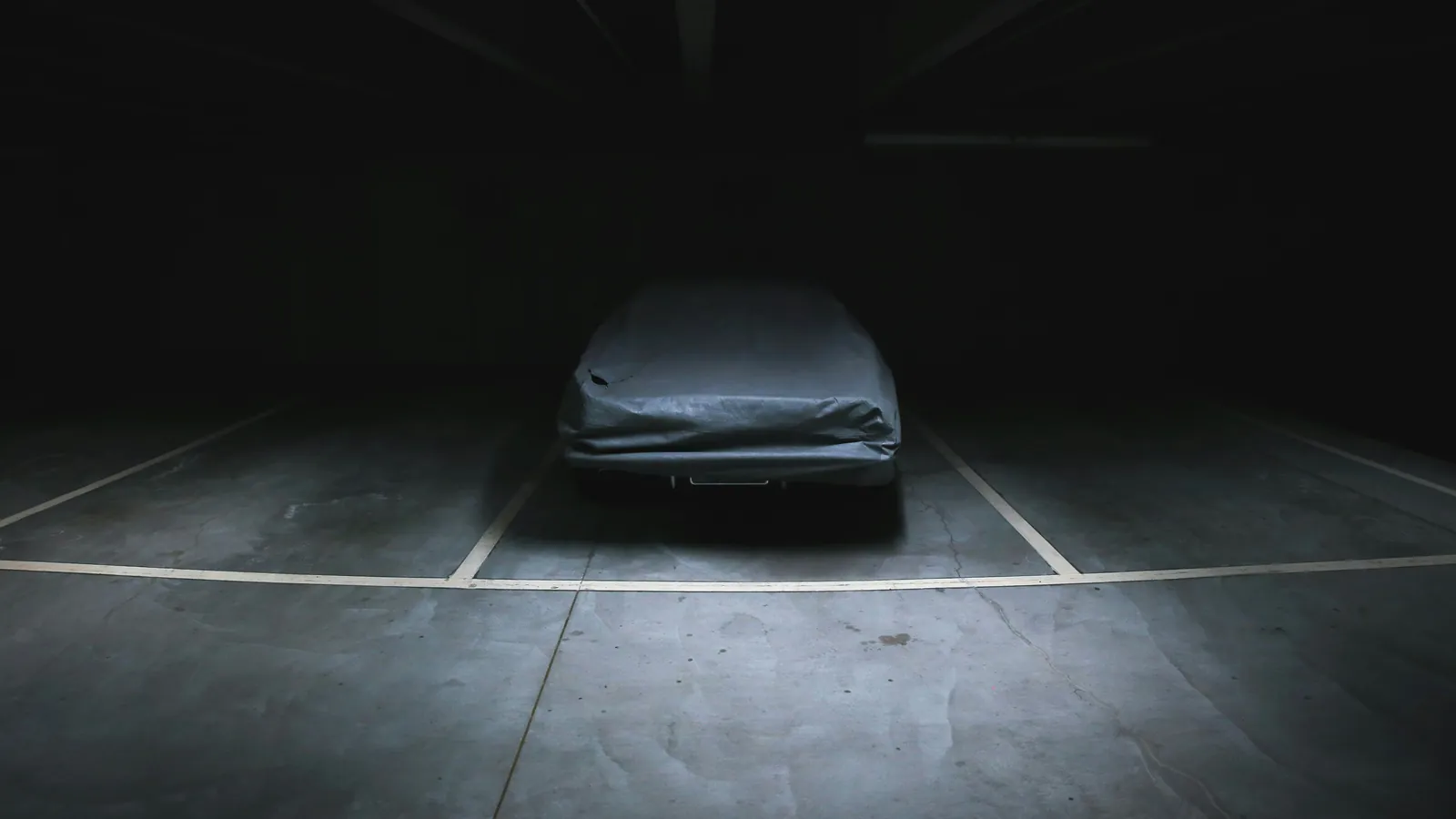
Powered car storage bubbles work. Fans keep filtered air moving around the car, which stops condensation forming even when the garage itself is damp. They cost £400–£900 up front and very little to run, but they need mains power all the time and take more effort than a cover. An unpowered bubble, or a plastic sheet, is a different thing: with no airflow, it can trap moisture against the car.
This guide covers how they work, the main types, what they cost, and when a bubble makes more sense than a cover or a storage facility.
The short answer
| Breathable indoor cover | Powered indoor bubble | Outdoor bubble | Managed storage | |
|---|---|---|---|---|
| Stops condensation in a damp garage | No | Yes | Yes | Yes (controlled humidity) |
| Needs mains power | No | Yes, all the time | Yes, all the time | No (done for you) |
| Up-front cost | Low | About £410–£830 | About £500–£880 | None |
| Ongoing cost | None | About £10–£12 a year to run | About £10–£12 a year to run | From about £141 a month |
How a powered bubble works
The best-known example is the Carcoon. It's a clear plastic enclosure on a base mat, inflated and ventilated by two 12-volt fans. When you first close it up, it runs in a drying mode that blows air over the car. Then it switches to a storage mode, recirculating the air inside the bubble through activated carbon filters and keeping outside air out.
The point is the moving air. Condensation forms when still, damp air meets a cold surface. Keep the air moving around the whole car, underneath included, and it doesn't get the chance. That's something a cover can't do. Hagerty notes that a cover leaves the underside exposed to damp air, and condensation can still creep in.
The trade-off is that a powered bubble has to stay powered. Hagerty points out that a Carcoon needs power at all times to stay up, and that it takes more time than simply putting a cover on.
Unpowered bubbles and plastic covers
An enclosure with no airflow is the opposite of what you want. A fully impermeable cover traps any moisture against the paintwork, as MG specialist MGOC Spares puts it, which is why breathable covers are recommended for storage. The same goes for a sealed bubble with no fans: whatever moisture is inside stays there. Our guide to indoor and outdoor car covers explains what to look for in a cover.
Indoor or outdoor?
Indoor bubbles are single-skin and designed for use inside a garage. Carcoon doesn't recommend its single-skin units outdoors.
Outdoor bubbles have a double skin. Carcoon's outdoor model blocks 99.9% of UV and sits on an insulated base mat. Owners report that wind and snow can still be a problem outdoors, so a sheltered spot helps.
Carcoon expects a well-looked-after unit to last three to five years, and guarantees the electrical parts for three.
Sizes and access
Carcoon makes its standard units in several sizes, for cars from small sports cars to large saloons. The inflated bubble is about 30cm wider than its base mat, so measure the garage before you buy, and leave room to walk round it.
Access differs by model. With the Indoor Evo you drive onto the base mat and zip the top over, and it opens from any side. The Indoor Veloce has a steel frame, so you can drive in and out in seconds and reach the sides and rear. Some owners find bubbles without a frame awkward to get into, because the cover drapes over the car when it's deflated.
What they cost
To buy (Carcoon's own prices, October 2026; the site doesn't say whether VAT is included):
| Model | Price |
|---|---|
| Indoor Evo | £411–£667 depending on size |
| Indoor Veloce (drive-in, steel frame) | £578–£831 |
| Outdoor Carcoon | £500–£883 |
Cair-O-Port, another UK brand, sells an indoor unit with three filtered fans; its small size was listed at £472.50 through the MG Car Club's shop, including a member discount.
To run: Carcoon says each fan costs about 1p a day, and running the unit continuously costs under £10 a year. Working it out ourselves from the published fan rating, at the October to December 2026 price cap of 26.32p per kWh, it comes to about £12 a year. Either way, it's small.
Battery charging is extra. Carcoon sells an optional Power and Charge Unit (£116.26) that maintains the battery and keeps the fans running through a short power cut. Without it, use a separate battery conditioner.
When a bubble makes sense
Your garage is damp and you want to keep the car at home. This is what bubbles are for. A powered bubble protects the car even when the garage air is damp, as long as the fans keep running.
Your garage is dry. A breathable indoor cover, a battery conditioner and a hygrometer to keep an eye on the humidity are cheaper and simpler. Check the humidity first: corrosion and mould both speed up once the relative humidity passes about 60–70%.
Your garage is damp and you'd rather fix the room. A garage dehumidifier dries the whole space, which also protects anything else you keep there. Our guide to car dehumidifiers compares the options.
You have no garage, or no power. A bubble needs mains electricity all the time, so it's not an option without power. An outdoor bubble needs a sheltered spot and a supply. For a valuable car, this is often where professional storage works out better: six months at the £141 median starting price for storage costs about £850, against £400–£900 for a bubble that still leaves the car at home. Our guide to what car storage costs has the full picture.
Motorkeep is an independent introduction service for car storage; we don't own or operate any facility we list, and we don't sell or receive commission on any product mentioned here. No independent test of storage bubbles has been published by a UK magazine that we could find; descriptions and prices are from the manufacturers' own sites, checked 27 October 2026, with practical points from Hagerty and owner reports. Running-cost estimate uses Ofgem's price cap for 1 October to 31 December 2026.
Frequently asked questions
- Do car storage bubbles work?
- Powered bubbles do what they claim: fans keep filtered air moving around the car, which stops condensation forming even when the garage itself is damp. The catch is that they need mains power all the time to stay inflated, and they take more effort than a cover. Unpowered bubbles and non-breathable covers can trap moisture against the car instead.
- How does a Carcoon work?
- Carcoon uses two 12-volt fans. It starts in a drying mode that blows air over the car, then switches to a storage mode that recirculates the air inside the bubble through activated carbon filters, keeping outside air out. It needs a mains socket.
- How much does a Carcoon cost?
- On Carcoon's own site in October 2026, the Indoor Evo cost £411–£667 depending on size, the drive-in Indoor Veloce £578–£831, and the Outdoor Carcoon £500–£883. The site doesn't say whether those prices include VAT.
- How much does a car bubble cost to run?
- Carcoon says its fans cost about 1p a day each and under £10 a year to run continuously. Our own estimate from its published fan rating, at the October–December 2026 price cap of 26.32p per kWh, is about £12 a year. Either way, the running cost is small.
- Does a Carcoon charge the battery?
- Not as standard. Carcoon sells an optional Power and Charge Unit (£116.26 in October 2026) that maintains the battery and keeps the fans running through a short power cut. Otherwise, use a separate battery conditioner.
- Can you use a car bubble outside?
- Only one designed for it. Carcoon doesn't recommend its single-skin indoor units outdoors; its outdoor model has a double skin that blocks 99.9% of UV and sits on an insulated base mat. Owners report wind and snow can still be a problem outside.
- Is a car bubble better than a car cover?
- For a car stored for months in a damp garage, a powered bubble does something a cover can't: it keeps air moving around the whole car, underneath included. In a dry garage, a breathable indoor cover is much cheaper and easier and does the job.